Christmas Reindeer Face Lineart Design
A Clean, Friendly Face That Stitches Like a Dream
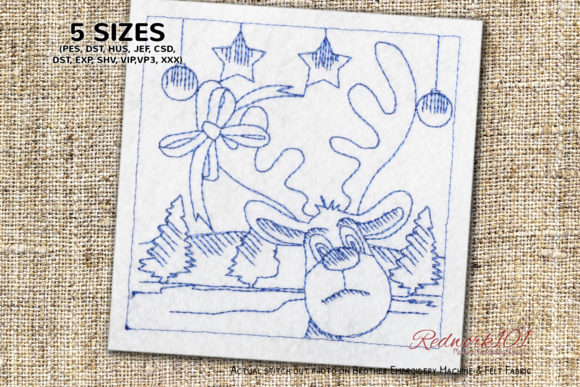
First impression? This isn’t a cluttered holiday motif—it’s a warm, confident lineart reindeer face: soft curves, expressive eyes, subtle antlers, and just enough contour to read clearly at 3–4 inches tall. No heavy fills, no fussy gradients—just intentional strokes that translate beautifully into stitch. I pulled it up on my embroidery software and immediately pictured it centered on a natural linen tea towel for a local boutique’s holiday collection. It feels handmade without looking amateurish, festive without being kitschy.
Where It Shines in Real Projects
I tested Christmas Reindeer Face Lineart Design across three real-world items: a cotton twill apron (for a baker’s holiday pop-up), a lightweight baby onesie (for personalized newborn gifts), and a structured canvas tote (for an Etsy shop’s limited-run seasonal drop). On all three, the design held its shape, with crisp corners and smooth curves stitching cleanly—even on the onesie’s delicate knit, thanks to light stabilizer and reduced top tension.
- Tote bags & tea towels: Perfect scale and visual weight. The lineart reads instantly from across a craft fair table, and customers consistently paused to touch the texture of the satin-stitched outline.
- Baby items & nursery decor: Gentle, non-overwhelming—ideal for heirloom-quality embroidery where subtlety builds trust. No dense fill stitches to stiffen fabric or irritate sensitive skin.
- Patches & caps: Works well as a standalone embroidered patch (backed with heat-seal adhesive), but avoid curved cap fronts unless you’re using a low-profile hoop and stretch mesh stabilizer—the antler tips can distort slightly on tight curves.
What to Watch For—Before You Stitch
This is a lineart design, not a filled motif—so clarity depends heavily on execution, not just file quality. Here’s what I learned the hard way:
- Hoop size matters more than usual. The face spans comfortably in a 4x4 hoop, but if you’re scaling down for a child’s beanie or wristband, test first: fine antler lines can vanish below 2.5 inches without careful digitizing tweaks.
- Texture changes everything. On terry cloth towels or fleece-lined sweatshirts, use cutaway + tear-away combo stabilizer. The running stitch base layer needs grip—or you’ll get puckering that blurs the clean lines.
- Dark fabrics demand contrast testing. I ran it in white thread on navy twill and loved the result—but only after confirming the satin stitch width was wide enough to prevent “ghosting” through the fabric. Always check black-and-white mockups before finalizing thread colors.
- The optional box stitch? Skip it unless it supports your brand. As noted in the description, the outer box is often stylistic—not part of the core design. On a minimalist apron or pillow cover, it adds unnecessary visual noise. But for a holiday gift tag or printable mockup background, it frames the face neatly.
How It Builds Value—For You and Your Customers
As a designer who sells both digital embroidery files and finished handmade products, I pay close attention to how a design affects perceived value. Christmas Reindeer Face Lineart Design does something quiet but powerful: it signals intentionality. Customers don’t see “another reindeer”—they see craftsmanship, restraint, and seasonal warmth. That translates directly to higher perceived value on Etsy listings, better engagement on social mockups, and stronger repeat interest from boutique buyers.
For small shop owners, it’s versatile branding gold: pair it with a simple serif font for a cohesive holiday collection, or layer it subtly in a corner of a kitchen towel set. For craft fair sellers, it’s fast to stitch yet distinctive enough to stand out beside busier, over-digitized competitors. And for custom apparel clients? It’s safe, scalable, and emotionally resonant—no risk of looking dated by January.
Practical Designer Notes—No Fluff, Just What Works
Before you load this machine embroidery design into your project:
- Run a test on scrap fabric matching your final substrate—especially if using textured, stretchy, or thin materials.
- Review stitch density in your software. Lineart designs can sometimes run too sparse; add a slight overlap in satin stitch segments if edges look broken.
- Confirm licensing terms before selling finished items or bundling the digital embroidery file with other design assets.
- Use proper stabilizer—lightweight cutaway for knits, medium-weight for woven cottons, and fusible for patches.
- Compare how it looks stitched in one solid thread color versus two (e.g., brown antlers + cream face)—sometimes minimal color shifts elevate handmade presentation more than complexity.
- If offering personalized gifts, note that this design scales cleanly for monogram integration—try a tiny initial tucked beneath the chin or along the jawline.
Friendly Final Thought
This isn’t a “wow-the-crowd” showstopper—and it doesn’t need to be. Christmas Reindeer Face Lineart Design succeeds by doing exactly what thoughtful holiday embroidery should: inviting warmth, holding up to repeated wear and washing, and letting the maker’s care shine through clean execution. Whether you’re prepping for a holiday craft fair, launching a small shop product line, or stitching personalized gifts for friends, it’s a reliable, quietly confident choice—one that earns repeat use, not just seasonal rotation.