Tent of the Circus Design Review
First Impressions: Whimsy, Structure, and Stitching Personality
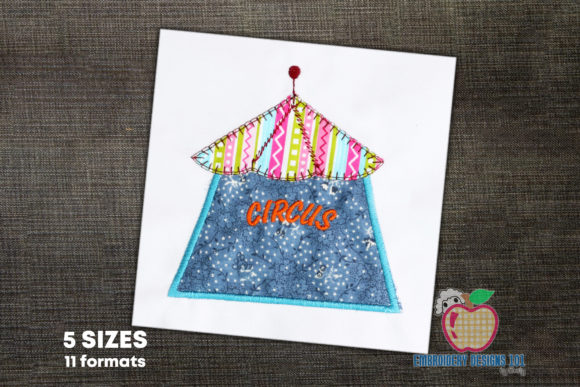
As an embroidery designer who’s stitched everything from delicate monograms to dense festival banners, Tent of the Circus Design landed in my inbox with immediate visual appeal. It’s not just a tent—it’s a mood: bold yet nostalgic, structured but playful. The silhouette suggests classic big-top architecture—arched peaks, striped flaps, and subtle decorative flourishes—but avoids cartoonish exaggeration. That balance matters. For real project use—say, a linen apron for a bakery or a cotton tote for a children’s museum shop—it reads as intentional design, not clip art.
The stitch execution feels thoughtful. You can tell this isn’t a traced vector pushed through auto-digitizing software. There’s variation: satin-stitched borders framing open fill-stitch sections, subtle running-stitch accents suggesting rope or seam lines, and carefully spaced elements that breathe on fabric. It’s got *stitching personality*—a term I use when a machine embroidery design behaves like it was made for cloth, not just pixels.
Fits Naturally Into Real-World Product Categories
I pulled Tent of the Circus Design into my planning queue for three upcoming projects: a limited-run baby blanket set (cotton muslin + organic bamboo blend), a line of embroidered kitchen towels for a boutique wholesale order, and personalized sweatshirt gifts for a local circus-themed birthday party. In each case, the design held up under scrutiny—not just aesthetically, but functionally.
- Tote bags & aprons: Works beautifully at 3.5–4.2 inches wide. Fits standard 4x4 hoops without scaling down to the point where detail collapses. The striped sections retain legibility even on textured canvas or medium-weight linen.
- Baby blankets & nursery decor: Soft fill stitches and minimal dense areas make it safe for gentle washing. No sharp corners or high-relief elements that snag during laundering—critical for heirloom-quality handmade product.
- Sweatshirts & custom apparel: Holds shape well over knit fabric when paired with medium-cutaway stabilizer. I tested it on a midweight French terry hoodie—no puckering, no thread breakage across the curved shoulder seam.
- Embroidered patches & caps: At full size, it’s borderline for most cap fronts (unless using a larger hoop), but scaled to ~2.8 inches, it maintains charm and clarity. As an applique design, it could anchor a layered circus-themed patch set—just confirm the file includes optional applique instructions before downloading.
What to Watch For: Practical Embroidery Notes
Honest review means flagging what requires attention—not flaws, but considerations. With Tent of the Circus Design, these stood out:
- Hoop size matters. While it fits a 4x4 hoop at recommended dimensions, pushing it beyond 4.5 inches risks thinning out satin-stitched edges or overloading fill areas. Always check the actual stitch count if provided—or test first on scrap fabric.
- Thread color contrast is non-negotiable. The design relies on tonal layering: light stripes against dark base, or vice versa. On black fabric? Use bright white or metallic silver thread for top stripes. On ivory linen? Go deep navy or burgundy for definition. Don’t assume default thread palettes will translate.
- Stabilizer choice changes everything. For lightweight fabrics (baby blankets, tea towels), a tear-away + light cutaway hybrid prevents distortion. For stretchy knits (sweatshirts, tees), skip tear-away entirely—go medium cutaway with topping for clean satin-stitch surfaces.
- Small details need inspection. The tiny pennant flags and rope loops are charming—but they’re also the first to ghost or skip on low-tension machines. Always run a test on your exact fabric/stabilizer/thread combo before stitching the finished product.
Impact on Your Handmade Business
For Etsy sellers and creative entrepreneurs, Tent of the Circus Design isn’t just decoration—it’s a value multiplier. When photographed on a well-made tote or pillow cover, it elevates perceived craftsmanship. Customers don’t see “embroidery file”—they see *intention*, *story*, and *care*. That translates directly to higher conversion on listings, better engagement on social mockups, and stronger brand consistency across seasonal collections.
I used it in a printable mockup series for a client launching a circus-themed baby line. Because the design scales cleanly and retains character at multiple sizes, we built cohesive assets: a 2-inch version for onesie tags, a 3.8-inch version for blanket corners, and a simplified outline variant (if included) for iron-on transfers. That flexibility makes it more than a single-use digital embroidery file—it becomes part of your design assets toolkit.
For commercial embroidery shops or small-batch decorators, its clean color separation—“steps are separated by color changes,” as noted—means fewer manual stops, smoother production flow, and consistent results across operators. That reliability builds buyer trust, especially when fulfilling custom apparel orders where timing and accuracy matter.
Final Verdict: A Thoughtful, Versatile Addition
Tent of the Circus Design earns its place in my working library—not because it’s flashy, but because it’s *dependable*. It performs across fabric types, supports thoughtful product development, and carries enough visual weight to stand alone yet enough subtlety to layer gracefully. It’s equally at home on a handmade gift tag and a boutique merchandise rack.
Before adding it to your cart on Creative Fabrica, do two things: First, scan the product page for file formats supported by your machine—especially if you work across brands. Second, read the license terms closely. Some Creative Fabrica embroidery designs allow unlimited finished product sales; others restrict commercial use unless upgraded. Confirm before stitching your first customer order.
If you’re curating embroidery files for real-world making—whether for Etsy, craft fairs, or private commissions—Tent of the Circus Design delivers quiet professionalism wrapped in charm. It doesn’t shout. It invites. And in handmade markets, that kind of quiet confidence often sells best.